
Thailand’s proof-of-funds requirement depends on the entry category. Check your embassy’s current guidance before travelling, and distinguish cash required at arrival from financial documents used in a visa application.
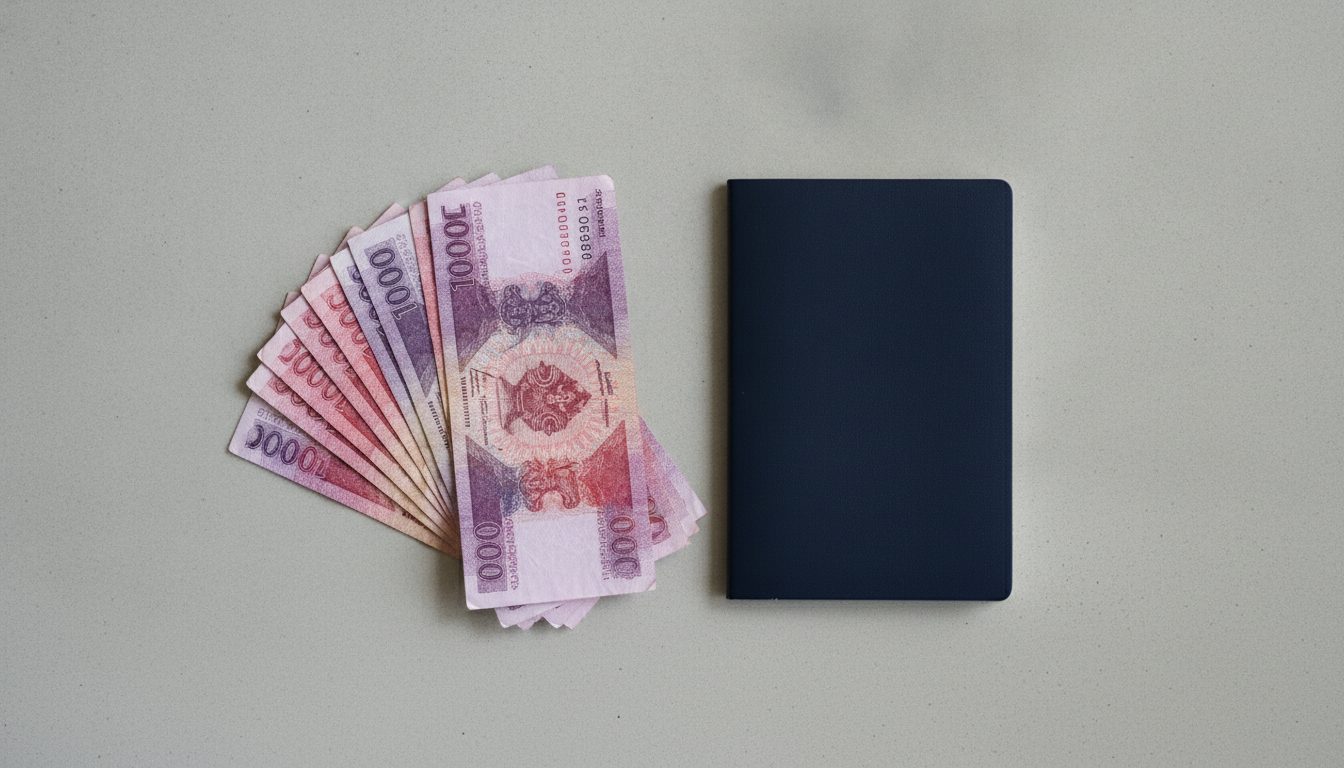
The numbers
Travellers arriving visa-exempt may be asked to demonstrate funds of 20,000 baht per person, or 40,000 baht per family travelling together. At current rates that's roughly £450 / $560 per person.
Prepare the required funds
The official visa-exemption guidance cited below specifies cash equivalent to 20,000 baht per person or 40,000 baht per family. Do not rely on a banking screenshot or credit limit as a guaranteed replacement. This corrects the older reference to a card statement in the retained image caption.
The rest of the checklist
While you're getting the paperwork straight, the other standing requirements are:
- Passport valid for at least six months from your date of entry.
- A confirmed onward or return ticket. This one is enforced by airlines at check-in far more often than by Thai immigration on arrival — a one-way ticket can get you refused boarding before you ever leave home.
- Proof of accommodation, at least for the first nights.
- Your TDAC QR code.
Cash, cards and bank statements serve different purposes
The Royal Thai Embassy in Washington states that visa-exempt travellers must possess adequate cash equivalent to 20,000 baht per person or 40,000 baht per family. This is a statement about available funds, not an amount you pay to an officer. Confirm the rule for your own nationality and entry category with the relevant embassy before departure.
A bank statement used in a visa application is not automatically a substitute for cash at the border. Likewise, possession of a debit or credit card does not prove that you can produce the cash an officer asks to see. Carrying another currency may meet an equivalent-cash requirement, but check the applicable guidance and do not assume an ATM will be available before the immigration desk.
Prepare for questions without rehearsing a story
Keep your accommodation booking, onward travel details and a straightforward itinerary accessible. If asked about your visit, answer accurately and consistently with those documents. Explain genuine changes to your plans rather than inventing reservations. Have your own documents available even when another member of the group organised the trip.
This review found no verified individual refusal case that establishes a universal rule about which alternative evidence an officer must accept. We therefore do not present traveller anecdotes as official precedent or invent a refusal example. If an officer raises a concern, ask calmly what evidence is needed and follow the official process. A visa or arrival-card confirmation does not guarantee entry; the entry decision remains with immigration.
Work out what this costs you
Rules and fees change; your budget should keep up. Estimate your Thailand trip budget — flights, rooms, food and transport in baht and your own currency, in about two minutes.
Build my Thailand budget →Source:
Reporting this piece draws on. Rules change — check the primary source before you act on anything here.
Published 7 July 2026. Travel rules, fees and prices change without much warning — always confirm with an official source or your embassy before you book or travel. Nothing here is legal, immigration or financial advice.