
A strip of ten paracetamol costs 10 to 25 baht at a Thai pharmacy. The same headache, taken to a private hospital walk-in clinic, starts at around 1,000 baht before anyone has handed you a tablet.
Medicine is the line in Thailand travel costs that travellers get wrong in both directions. Half pack a suitcase corner full of branded tablets bought at home for several times the Bangkok price; the other half arrive with nothing, get a stomach upset on day three and walk into a hospital for something a pharmacist settles in ninety seconds for forty baht. This budget travel guide puts 2026 baht figures on what Thai pharmacies actually charge, explains the four legal tiers that decide what you can buy and from whom, and works out what a sensible travel kit costs bought on arrival. At 33.76 baht to the US dollar — the Federal Reserve noon rate on 30 October 2026 — every figure below is in baht first.
Thai pharmacy prices in 2026: the Thailand travel costs table
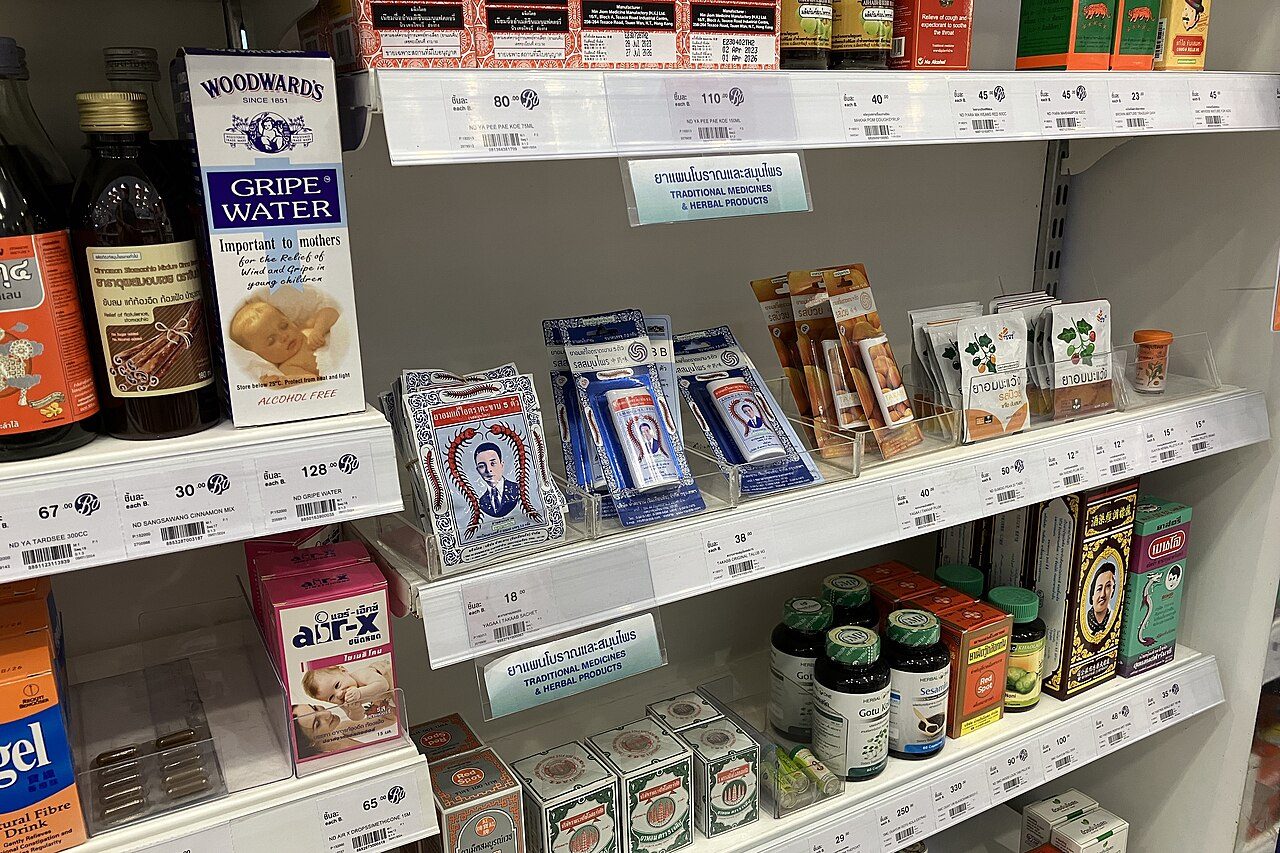
Prices are printed on the box and are not negotiable, which makes a pharmacy one of the few places in Thailand where nobody is working out what you will pay. The figures below are typical independent-pharmacy ranges reported across 2026 guides; chains sit at the top of each range or above it.
| Item | Typical price (THB) | In USD |
|---|---|---|
| Paracetamol 500 mg, strip of 10 | 10–25 | $0.30–0.74 |
| Ibuprofen 400 mg, strip of 10 | 15–50 | $0.44–1.48 |
| Cetirizine 10 mg, strip of 10 | 20–60 | $0.59–1.78 |
| Oral rehydration salts, per sachet | 5–15 | $0.15–0.44 |
| Loperamide (anti-diarrhoeal), per strip | 20–80 | $0.59–2.37 |
| Povidone-iodine antiseptic | 45–220 | $1.33–6.52 |
| Hydrocortisone 1% cream (bites, heat rash) | 80–150 | $2.37–4.44 |
| Clotrimazole antifungal cream | 80–150 | $2.37–4.44 |
| DEET mosquito repellent (Sketolene, Soffell) | 80–150 | $2.37–4.44 |
| Sunscreen, Thai brand, 50 ml | 200–400 | $5.92–11.85 |
| Sunscreen, imported European, 50 ml | 600–1,200 | $17.77–35.55 |
| Tiger Balm | 60–120 | $1.78–3.55 |
| Amoxicillin 500 mg, 10 capsules | 40–80 | $1.18–2.37 |
| Private hospital walk-in consultation | 1,000–2,000 | $29.62–59.24 |
The shape of that table is the whole article. Everything a healthy traveller is likely to need costs between ten and a few hundred baht, and the one line that runs into four figures is the consultation you pay for by not owning the forty-baht version.
The outlier is imported sunscreen. A European branded SPF50 at 600 to 1,200 baht is the single most expensive thing most visitors buy in a Thai pharmacy, and it is dearer than the same bottle at home. Thai mineral brands at 200 to 400 baht do the identical job in identical sun. If you have a brand you trust, pack it; if you do not, buy local and keep the difference, which at the top of the range is 900 baht — two nights of cheap food in Bangkok.
The four tiers that decide where you can buy medicine
Thailand's Drug Act of 1967 sorts medicines into four legal categories, and the category — not the shop's inclination — decides who may sell it to you. It is worth two minutes of a budget travel guide because it explains why the minimart on your resort strip has paracetamol but not antibiotics.
| Category | Who controls it | Where you can buy it |
|---|---|---|
| Household remedies | Nobody | Any shop, including 7-Eleven and hotel minimarts |
| Non-dangerous drugs | Nobody | Pharmacies, open shelf |
| Dangerous drugs | Pharmacist | Pharmacy, handed over by the pharmacist |
| Specially controlled drugs | Physician | Prescription only |
Two practical consequences. First, a convenience store can legally sell you only the household-remedies tier, which is why 7-Eleven runs to paracetamol, rehydration salts and repellent and stops there. Second, a licensed pharmacy must have a pharmacist on duty during opening hours under the Pharmacy Profession Act of 1994 — so if the person behind the counter reaches for anything stronger than basic pain relief without asking you a single question, you are in the wrong shop.
Antibiotics: available, and still usually the wrong purchase
Antibiotics such as amoxicillin, azithromycin and ciprofloxacin sit in the dangerous-drugs tier, which in Thai law means a pharmacist must dispense them but a doctor's prescription is not required. Peer-reviewed work on Thai drug classification lists antibiotics as behind-the-counter with no prescription requirement; at least one law firm's summary reads the same category as needing a prescription too. The practical reality that every guide describes is that independents sell them across the counter and the chains are more cautious.
Cheap is not the same as indicated. Most travellers' stomach trouble in Thailand is self-limiting and wants rehydration salts and a day of dull food, not an 80-baht course of amoxicillin bought on a guess. Taking the wrong antibiotic badly is how a mild week becomes a bad one, and Thailand already has a serious antimicrobial-resistance problem. Describe your symptoms to the pharmacist, take the answer seriously when it is "you don't need that", and see a doctor for anything with a high fever, blood, or more than about three days behind it.
Chains against independents: a 20 to 40 per cent gap
Boots and Watsons are everywhere a tourist walks, have English-speaking staff, air conditioning and card terminals, and charge 20 to 40 per cent more than the independent shop around the corner for the same medicine. For a single strip of paracetamol the difference is five baht and not worth a detour. For a full kit it is a few hundred, and for anything you are buying repeatedly across a long trip it compounds.
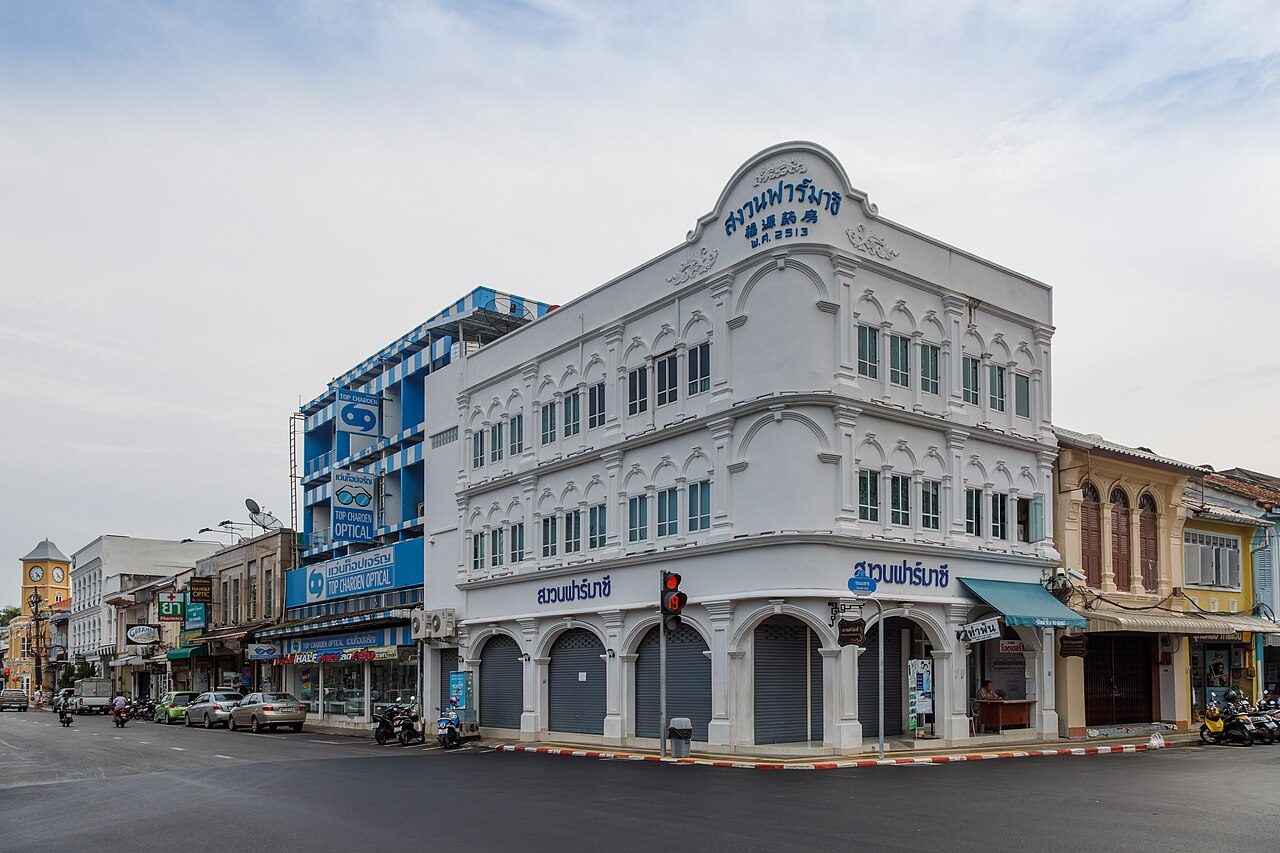
The independents are the small shops with the Thai word ยา on the sign, a cross symbol, and typically a pharmacist's licence certificate on the wall by the till. They are generally open 09:00 to 21:00 or 22:00, and the 24-hour ones cluster around the big international hospitals. That last detail matters at 3am, and it is a useful one of those Thailand travel tips nobody mentions until you need it.
What a fortnight's travel kit costs, bought on arrival
Here is a realistic kit for two people on a two-week trip, priced at the middle of the independent-pharmacy ranges above.
| Item | Independent pharmacy | Chain, at +30% |
|---|---|---|
| Paracetamol, 2 strips | 30 THB | 39 THB |
| Ibuprofen, 1 strip | 25 THB | 33 THB |
| Cetirizine, 1 strip | 35 THB | 46 THB |
| Loperamide, 1 strip | 30 THB | 39 THB |
| Rehydration salts, 5 sachets | 50 THB | 65 THB |
| Povidone-iodine antiseptic | 60 THB | 78 THB |
| Hydrocortisone 1% cream | 100 THB | 130 THB |
| Plasters, assorted | 40 THB | 52 THB |
| DEET repellent | 110 THB | 143 THB |
| Sunscreen SPF50, Thai brand | 300 THB | 390 THB |
| Tiger Balm | 70 THB | 91 THB |
| Total | 850 THB ($25.18) | 1,106 THB ($32.76) |
Eight hundred and fifty baht covers two people for a fortnight, and the shop-choice alone is worth 256 baht — about $7.58. As a share of total Thailand travel costs it is close to a rounding error, which is exactly why it is worth getting right rather than worrying about. Set that against the average cost per day Thailand figures a frugal traveller works to, roughly 1,000 to 1,500 baht all in: the entire medical kit is most of one ordinary day. A single imported sunscreen at the top of its range costs more than everything in that column combined.
Which is the argument against packing. Branded Western equivalents of that list cost multiples of 850 baht in a European or American pharmacy, and they occupy the luggage allowance you would rather spend on something else. Bring the prescription medicines you genuinely rely on, in their original labelled packaging, and buy the rest at a Thai pharmacy on day one. There is no need to shop on the way in either: whatever you skip during your Suvarnabhumi airport transit will be waiting, cheaper, in the first shop with a cross on the sign near your hotel. The same logic drives our 7-Eleven price guide and the drinking water prices guide: anything sold to Thais at Thai prices is cheaper on arrival than at home.
One caution on prescription medicines
Psychotropic and narcotic-class drugs — the codeine, benzodiazepine and ADHD-medication families among them — need a Thai FDA permit to bring in, generally applied for about 15 days ahead with a doctor's letter and a copy of the prescription, and are limited to a 30-day supply. The application itself is free. Tramadol and codeine products are now tightly controlled inside Thailand too, so this is not a corner to improvise in.
When the pharmacy is the wrong answer for your Thailand travel costs
The savings above exist because a pharmacist handles the ordinary things. The counterpart is knowing when to stop saving. A government hospital consultation runs roughly 100 to 300 baht; a private one is 800 to 1,500, and a walk-in clinic at one of the big Bangkok private hospitals 1,000 to 2,000. A dengue rapid antigen test is 300 to 600. An inpatient stay after a motorbike accident or a bad dengue case runs into the hundreds of thousands of baht, which is the entire argument for travel insurance and the reason a policy at roughly 1,400 baht a month is the best-value line in any Thailand budget travel plan.
Treated the right way round, the arithmetic is stark. Traveller's diarrhoea handled at a pharmacy is 10 baht of rehydration salts and 30 baht of loperamide: 40 baht. The same complaint walked into a private hospital is 1,000 to 2,000 baht for the consultation alone, before dispensing. That is a saving of 960 to 1,960 baht — $28 to $58 — for knowing which door to open, repeated for every bite, scrape, cold and hangover of the trip.
Where the saving leaks back into your Thailand travel costs
Pharmacies are a cash-and-card business, and both ends can cost you. Every Thai ATM adds a flat 220-baht fee to a foreign-card withdrawal — more than a quarter of the whole kit above — so withdraw large and rarely; the detail is in our Thailand ATM fees guide. At a chain's card terminal, refuse any offer to bill you in your home currency, which is dynamic currency conversion and quietly adds 3 to 7 per cent. For notes, do your Thai baht exchange at a licensed counter such as a SuperRich Thailand branch rather than an airport kiosk; our Thailand money exchange finder shows the nearest counters to wherever you are staying and checks a board rate against the live one.
Bottom line: the savings summary
Learn one sign, pick the independent over the chain, and treat the hospital as the thing insurance is for rather than the first stop for a sore throat.
| Swap | You pay | Instead of | You save |
|---|---|---|---|
| Pharmacist vs private hospital walk-in, per upset stomach | 40 THB | 1,000–2,000 THB | 960–1,960 THB ($28–58) |
| Independent vs chain, fortnight kit for two | 850 THB | 1,106 THB | 256 THB ($7.58) |
| Thai vs imported sunscreen, 50 ml | 200–400 THB | 600–1,200 THB | up to 900 THB ($26.66) |
| Buying repellent at a pharmacy vs a resort shop | 80–150 THB | Tourist-strip pricing | Several hundred baht a trip |
| Withdrawing cash once rather than four times | 220 THB | 880 THB | 660 THB ($19.55) |
None of this is about going without. Medicine should be one of the smallest lines in your Thailand travel costs, and in Thailand it genuinely is. You get the same tablets, from a trained pharmacist, in a shop that posts its prices on the shelf edge — it costs a few hundred baht for a fortnight instead of a few thousand, and the one genuinely expensive outcome is the one insurance exists to cover. Drop your own figures into our free Thailand trip cost calculator and see what a properly stocked 850-baht wash bag does to the contingency line of a cheap travel Thailand budget.
This guide is about prices, not treatment. Nothing here is medical advice; talk to the pharmacist in front of you, and to a doctor when the answer matters.
Work out what this costs you
Rules and fees change; your budget should keep up. Estimate your Thailand trip budget — flights, rooms, food and transport in baht and your own currency, in about two minutes.
Build my Thailand budget →Source:
Reporting this piece draws on. Rules change — check the primary source before you act on anything here.
- Leelavanich et al., Risk Management and Healthcare Policy (2020) - Prescription and Non-Prescription Drug Classification Systems Across Countries: Lessons Learned for Thailand: the Drug Act's four legal categories (specially controlled drugs, dangerous drugs, non-dangerous drugs and household remedies), antibiotics such as amoxicillin, azithromycin and doxycycline classified behind-the-counter with a pharmacist as gatekeeper and no prescription requirement, household remedies saleable by non-pharmacy retailers, and type 1 community pharmacies requiring a pharmacist on duty during opening hours (cited in article dated: 2026-11-09)
- Anglo Siam Legal - Pharmaceutical Regulation in Thailand: The Overview, last updated 30 April 2026: pharmacist supervision required at retail pharmacies under the Pharmacy Profession Act B.E. 2537 (1994), a sale licence with a pharmacist physically present during operating hours, and a classification table reading the dangerous-drugs category as pharmacist plus prescription (cited in article dated: 2026-11-09)
- ThailandKnowledge - Thai Pharmacy OTC Guide 2026, last verified June 2026: paracetamol 10 baht per strip of ten 500 mg, ibuprofen 15-25, cetirizine 30-60 per ten, rehydration sachets 5-15, loperamide 20-40 per strip, clotrimazole cream 80-150, DEET repellent 80-150, Thai mineral sunscreen 200-400 and imported European 600-1,200 per 50 ml, omeprazole 80-150, walk-in private hospital consultation 1,000-2,000, and Boots and Watsons pricing 20-40 per cent above independents, usual hours 09:00-22:00 with 24-hour branches near major hospitals (cited in article dated: 2026-11-09)
- Royal Ivory Nana - Bangkok Pharmacy Guide: OTC Medications, Prices & Tips, published 15 June 2026: paracetamol 15-25 per ten 500 mg, ibuprofen 25-50 per ten 400 mg, cetirizine 20-40 per ten, rehydration sachets 5-10, amoxicillin 500 mg ten capsules 40-80, azithromycin 500 mg three tablets 80-150, ciprofloxacin 60-120, metronidazole 30-60, chains open about 8am-10pm and independents cheapest, tramadol and codeine now tightly controlled (cited in article dated: 2026-11-09)
- Adventure Thailand - Thai Pharmacy Guide: OTC Meds & Laws, modified 12 June 2026: pain relief 20-120, antihistamine cream 80-150, rehydration salts 5-10 each, loperamide 40-80, povidone-iodine and Bepanthen-type antiseptics 45-220, hydrocortisone 1% 80-150, Tiger Balm 60-120, DEET repellent 80-120 at convenience stores, private hospital consultation 800-1,500 and government hospital 100-300, dengue rapid antigen test 300-600, travel medical cover around 1,400 baht a month, a flat 220-baht foreign-card ATM fee, and Thai FDA import permits for psychotropic and narcotic drugs applied for about 15 days ahead with a doctor's letter and limited to a 30-day supply (cited in article dated: 2026-11-09)
- Federal Reserve via FRED (DEXTHUS) - Thai Baht to U.S. Dollar Spot Exchange Rate: 33.7600 baht per US dollar, noon buying rate in New York City, observation dated 30 October 2026 (cited in article dated: 2026-11-09)
Published 9 November 2026. Travel rules, fees and prices change without much warning — always confirm with an official source or your embassy before you book or travel. Nothing here is legal, immigration or financial advice.