
Thailand travel costs rarely swing as hard as they do over the twenty kilometres between Krabi International Airport and Ao Nang. The same road, the same hour, the same two suitcases: 150 baht on the shared airport bus, or up to 1,500 baht on a prepaid car voucher sold twelve metres from the arrivals door. That is a tenfold spread — about $4.50 against $45 — and almost nobody comparison-shops at 11pm with a trolley in one hand.
This budget travel guide prices every realistic way out of Krabi airport in October 2026, then keeps going: the 50-baht white songthaew to Krabi Town, the 100-baht longtail boats to Railay, and what a full week of moving around the Krabi coast actually costs a couple. At roughly 33.5 baht to the US dollar, the gap between the shared version of that week and the lazy one is about 5,200 baht, or $155. Against an average cost per day Thailand-wide of 1,500 to 2,500 baht, that is two entire days of budget decided at an arrivals counter.
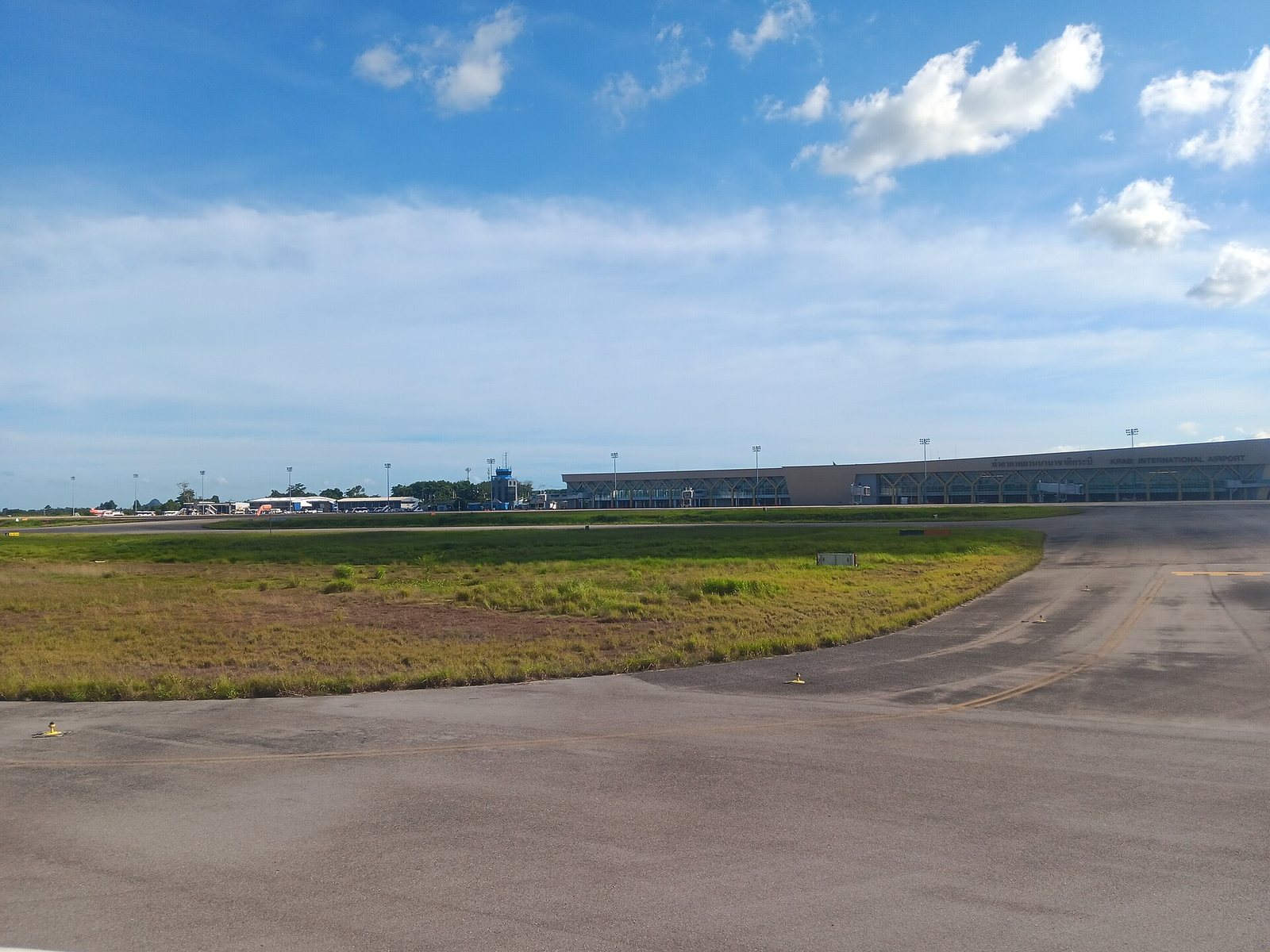
Thailand travel costs from Krabi airport: every option priced
Check the unit column before you compare rows. The first three are charged per person; everything from the taxi counter down is one price for the whole vehicle, which is exactly why a solo traveller and a family of four should read this table differently.
| How you travel | Cost (baht) | Unit | Time |
|---|---|---|---|
| Airport shuttle bus to Ao Nang | 150 | per person | 45–60 min |
| Shared minivan, pre-booked | 150–200 | per person | 35–45 min |
| Local songthaew via Krabi Town | 80–150 | per person | 60+ min |
| Airport counter taxi, sedan | 550–700 | per car (3–4) | 30–40 min |
| Pre-booked private sedan transfer | 550–600 | per car | 30–45 min |
| Grab or Bolt car | 600–900 | per car | 25–35 min |
| Grab after about 22:00 | 800–1,000 | per car | 25–35 min |
| Airport counter taxi, minivan | 800–1,050 | per car (8–9) | 30–40 min |
| Prepaid voucher, peak season | 1,200–1,500 | per car | 25–30 min |
One honest caveat, because the guides contradict each other and you should know it before you argue at a desk: the official counter rate for a sedan to Ao Nang is widely reported at 550 to 700 baht, yet voucher sales at the same airport are quoted at 1,200 to 1,500 in high season. Both figures are real. The lower one is the fixed fare; the higher one is what a prepaid package costs when the queue is long and nobody is counting. Ask for the fixed-rate sedan, by that name, and pay in baht cash.
The 150-baht airport bus almost everyone walks past
Krabi's airport bus is the single biggest saving in this budget travel guide, and it is invisible because it does not shout. The shuttle is run by Phichet Transport, tickets are sold at a counter inside both arrivals halls, and it costs 150 baht per person to either Krabi Town or Ao Nang. Departures are loosely timed to arriving flights through the day, with the last runs around 21:00 to 22:00. It stops in Krabi Town and then at several Ao Nang hotels, which is why a scheduled 45-minute run can stretch to an hour.
For two people that is 300 baht against 1,400 for a counter minivan — a 1,100-baht saving, or $33, for roughly twenty extra minutes. For four people sharing, the maths flips: 600 baht of bus seats versus an 800-baht minivan is a 200-baht gap, and with luggage and a late flight the van is the better buy. That is the whole decision, and it takes ten seconds at the counter.
If you land after the last bus, the fixed-rate sedan from the counter at 550 to 700 baht beats a late-night Grab at 800 to 1,000. Grab coverage in Krabi is thinner than in Bangkok or Phuket, and pickups before about 06:00 are unreliable, so do not plan a dawn departure around an app.
Krabi Town and the 50-baht white songthaew
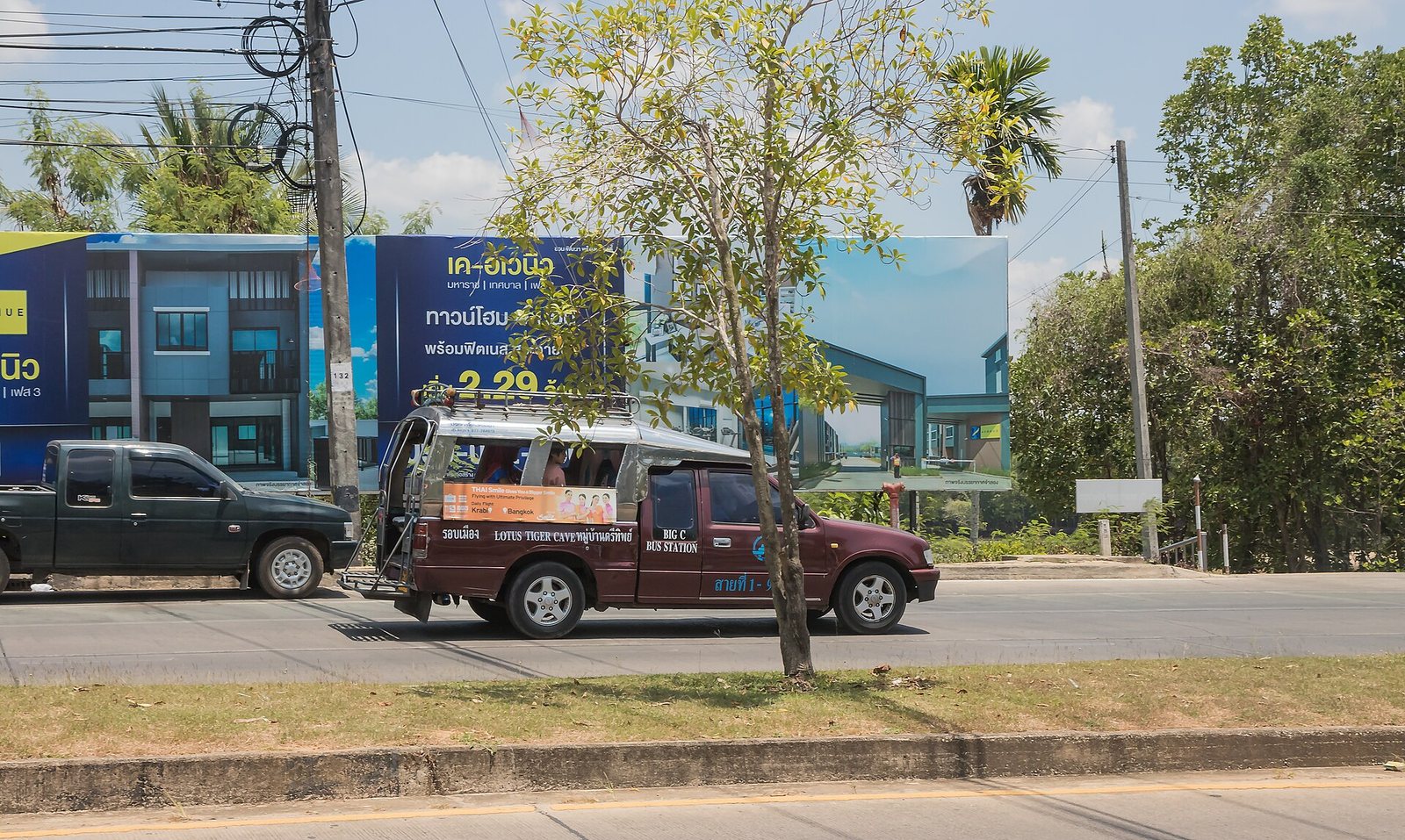
Once you are based in Ao Nang, the white songthaew is the backbone of cheap travel Thailand on this coast. It runs the 20 kilometres between Ao Nang and Krabi Town every 15 to 20 minutes through the day, costs about 50 baht per person, and rises to roughly 60 baht after 18:00. Flag it on the inland side of the beach road, or wait near the 7-Eleven; you pay the driver in cash when you get off.
| Local journey | Shared fare | Private alternative |
|---|---|---|
| Ao Nang ↔ Krabi Town | 50 per person (60 after dark) | 400–600 taxi, 350–550 Grab |
| Around Krabi Town, incl. bus terminal | 20–30 per person | 100–150 taxi or tuk-tuk |
| Airport ↔ Krabi Town | 150 shuttle, or 50–80 songthaew | 600–800 per car |
| Scooter hire | — | 150–250 per day plus fuel |
A couple making two return trips to town in a week pays 400 baht on songthaews and about 1,800 in Grab cars. Same road, same twenty-five minutes, 1,400 baht of difference — roughly three nights of a fan room in low season.
Railay by longtail: 100 baht, and why the boat waits
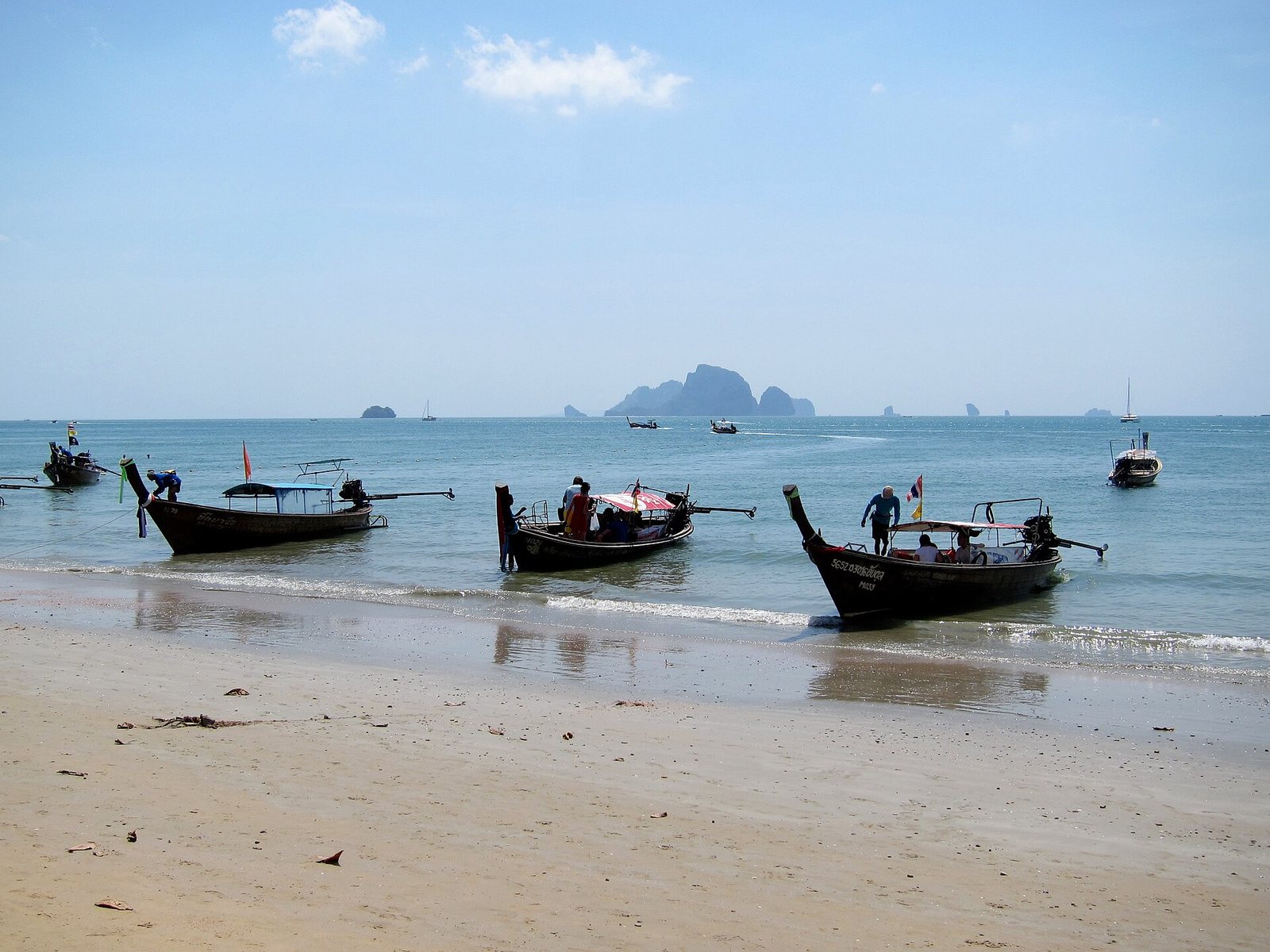
Railay has no road, so the boat is not optional — but the price is. From Ao Nang beach the shared longtail to Railay West is 100 baht per person one way, running roughly 08:00 to 18:00, and the skipper waits until about eight passengers are aboard. After dark the same crossing is 150 baht, a flat 50-baht night surcharge rather than a negotiation. From Ao Nam Mao pier, east of Ao Nang, the crossing to Railay East is also 100 baht and fills at about six passengers, between roughly 09:00 and 18:30.
Chartering the whole boat is where the money goes: about 600 baht for the hull, which is sensible for six friends and terrible for two. Every longtail on this coast is cash only, in baht, in small notes — there is no card machine on a wooden boat, and the nearest ATM charges the standard 220-baht foreign-card fee. Two people doing Railay as a day trip pay 400 baht of boat all in. The same pair chartering both ways pay 1,200 and arrive at exactly the same beach.
Worked example: a couple, one week on the Krabi coast
Identical itinerary, identical week. Only the vehicle changes.
| Leg | Shared and local | Private and app |
|---|---|---|
| Airport to Ao Nang, two people | 300 | 1,400 |
| Ao Nang back to the airport | 300 | 1,400 |
| Two return trips to Krabi Town | 400 | 1,800 |
| Two return days at Railay | 800 | 2,400 |
| Week total | 1,800 | 7,000 |
The shared week costs 5,200 baht less — about $155, or four nights of guesthouse in Ao Nang outside high season. Nothing in the cheap column involves haggling, an app, or getting up early. It involves reading a counter sign instead of following the man holding a clipboard.
Thailand travel tips: where the rest of the money leaks
Two habits undo the savings before you have unpacked. The first is a careless Thai baht exchange — a hotel desk or an airport booth typically costs 0.8 to 1.2 baht per dollar more than a town counter, so changing $500 lazily burns 400 to 600 baht, which is both airport transfers and a Railay day. The second is buying data on arrival: a local SIM card Thailand-side from a 7-Eleven or a provider shop in town runs roughly half the airport counter price for the same 30-day package.
💱 Changing cash in Krabi or Ao Nang? Our money exchange finder lists the counters nearest you and shows whether the rate on the board is worth the walk.
Bottom line: your Thailand travel costs savings summary
- The airport shuttle to Ao Nang is 150 baht a head. Buy it at the counter inside arrivals, not outside from a clipboard.
- Ask for the fixed-rate sedan by name. 550 to 700 baht per car is the counter rate; 1,200 to 1,500 is a peak-season voucher.
- Four people with bags should take the minivan. At 800 to 1,050 per car it beats four bus seats on time and effort.
- Ao Nang to Krabi Town is about 50 baht by white songthaew — 60 after 18:00, every 15 to 20 minutes, flagged from the inland kerb.
- Railay is 100 baht per person each way. Boats leave when roughly eight passengers are aboard; after 18:00 it is 150.
- Charter a longtail only with five or more. About 600 baht for the whole boat is poor value for a couple.
- Carry small baht notes. Boats, songthaews and shuttle drivers are all cash, and nobody breaks a 1,000 at a pier.
- Budget 150 to 300 baht a day each for local transport. That covers a town run, a boat and a spare taxi in the rain.
Krabi punishes arrival-day fatigue harder than most Thai destinations, because the cheap option and the expensive one are sold within sight of each other. If you are island-hopping from here, our guide to Phi Phi ferry costs and pier fees prices the next leg, and five Thai cities compared by daily cost shows how the Andaman coast stacks up against Bangkok and the north. Getting here cheaply matters too: flights from Bangkok run 900 to 2,000 baht one way against 715 to 1,140 for the overnight bus, so once you add Suvarnabhumi airport transit and the hours lost, flying usually wins. Put your own numbers into our Thailand trip budget calculator and see what a week of taxis would have cost you.
Krabi on a budget: quick answers
How much is the bus from Krabi airport to Ao Nang?
The shared airport shuttle costs 150 baht per person to Ao Nang or Krabi Town, with tickets sold at a counter inside both arrivals halls. Departures are timed loosely to arriving flights through the day and the last runs are generally around 21:00 to 22:00. The journey takes 45 to 60 minutes because the bus calls at Krabi Town and several Ao Nang hotels on the way. A pre-booked shared minivan covers the same route for 150 to 200 baht per person in 35 to 45 minutes.
Is Grab cheaper than a taxi in Krabi?
Usually not. A Grab or Bolt car from the airport to Ao Nang runs 600 to 900 baht, rising to 800 to 1,000 late at night, while the fixed-rate sedan at the airport taxi counter is quoted at 550 to 700 baht for up to three or four passengers. Grab's advantage is a price shown before you book and no cash needed; its disadvantage is thin driver coverage outside peak hours, with early-morning pickups before about 06:00 the least reliable.
How do I get from Ao Nang to Railay Beach cheaply?
Take the shared longtail boat from Ao Nang beach for 100 baht per person one way. Boats run from roughly 08:00 to 18:00 and leave once about eight passengers are aboard, so a short wait is normal. After 18:00 the fare rises to 150 baht. The crossing from Ao Nam Mao pier to Railay East is also 100 baht and fills at about six passengers. Chartering a whole longtail costs around 600 baht, which only makes sense for a group. All boats are cash only.
What should I budget per day for transport in Krabi?
About 150 to 300 baht per person per day, which covers a return songthaew to Krabi Town or a return longtail to Railay plus something spare. Renting a scooter instead costs 150 to 250 baht a day plus fuel and only pays off if you are riding daily. Relying on taxis and Grab pushes the same day past 700 baht per couple, and a week of private transfers and chartered boats runs about 7,000 baht against 1,800 doing it locally.
Work out what this costs you
Rules and fees change; your budget should keep up. Estimate your Thailand trip budget — flights, rooms, food and transport in baht and your own currency, in about two minutes.
Build my Thailand budget →Source:
Reporting this piece draws on. Rules change — check the primary source before you act on anything here.
- Byklo - Krabi Airport to Ao Nang 2026: 150-baht airport bus, 150-200 baht shared shuttle van, 80-100 baht songthaew, 600-900 baht Grab and 1,200-1,500 baht prepaid taxi voucher (cited in article dated: 2026-10-17)
- OutThailand - Krabi Airport to Ao Nang: Phichet Transport 150-baht shuttle, 80-baht songthaew, 550-700 baht counter sedan and 800-1,050 baht counter minivan (cited in article dated: 2026-10-17)
- OutThailand - Railay Beach guide: 100-baht shared longtail from Ao Nang, 150 baht after 18:00, Ao Nam Mao crossing and roughly 600 baht to charter a boat (cited in article dated: 2026-10-17)
- Thong Yib Thong Yod - Ao Nang to Krabi Town: about 50 baht by white songthaew, 60 after 6pm, every 15-20 minutes, against 400-600 baht by taxi and 350-550 by Grab (cited in article dated: 2026-10-17)
- Thailand By Bus - Krabi to Ao Nang: shared minivan 150-200 baht, private taxi 500-600 baht and 20-30 baht songthaew hops to the bus terminal (cited in article dated: 2026-10-17)
- Visit Thailand Today - Bangkok to Krabi 2026: budget flights 900-2,000 baht one way against 715-1,140 baht on the overnight bus (cited in article dated: 2026-10-17)
- Wise currency converter - Thai baht to US dollar mid-market rate, 33.5 baht per dollar on 16 October 2026 (cited in article dated: 2026-10-17)
Published 17 October 2026. Travel rules, fees and prices change without much warning — always confirm with an official source or your embassy before you book or travel. Nothing here is legal, immigration or financial advice.